top of page
Battle Bot design course
At the age of 17, I was very fortunate to be able to go to MIT in Boston and attend a course on robotics and robotic design.
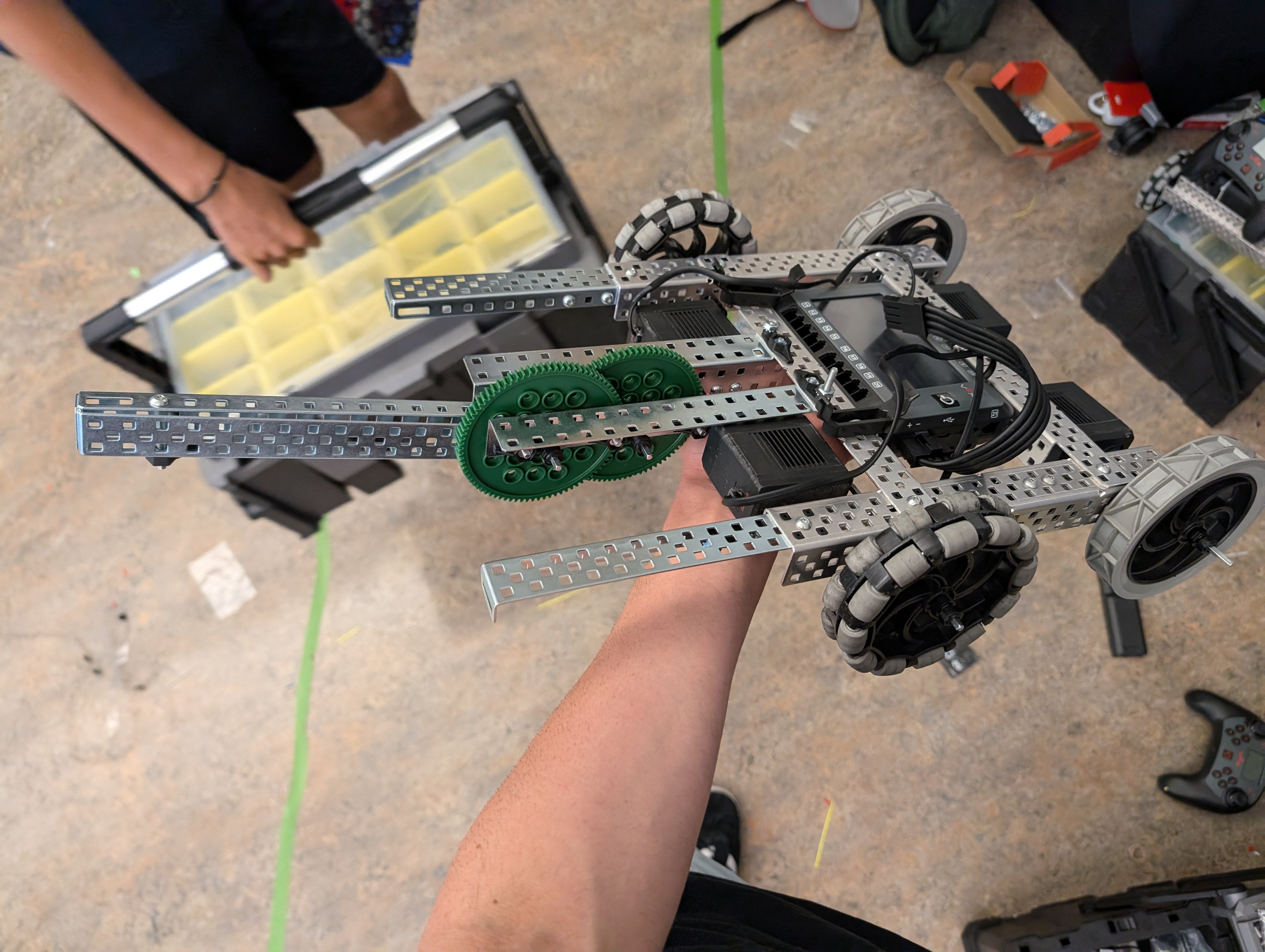
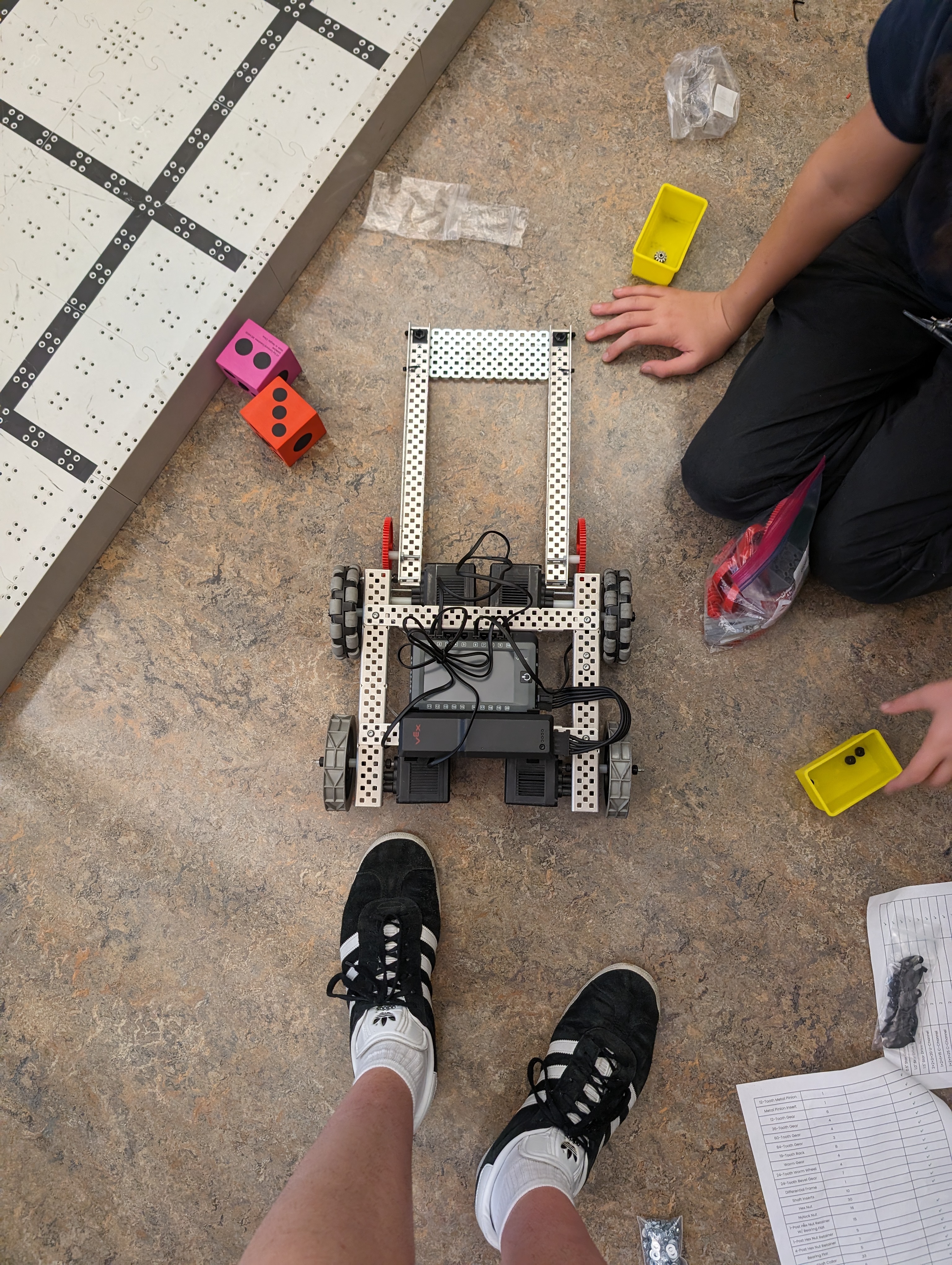
In this course, we were tasked to design, program, and produce a custom "battle-bot" from scratch for a battle championship at the end of the two weeks. Rather than building the bot using the given examples, which most teams did, we designed an original rear-wheel-drive bot with a very high torque lifting mechanism to flip rival battle-bots over, leading to an instant win.
Key Technical Points For Our Design:
1. Control System:
Written movement code using C# to send from controller to bot computer, driving motors.
2. Weapon Mechanism:
Dual-motor driving a 64:1 compound gears connected to a lifting rod, to flip over any weight rival bot (required counter-weight at rear which also acted as a stop to not flip ourselves over).
3. Drivetrain:
Rear-wheel-drive using high grip wheels and own weight movement after lifting rival bot, then we used omni-directional wheels at front for turning our bot.
Engineering Iterations
1. Mechanism Iteration (Not enough torque):
Issue:
Our first design used two motors driving two individual 16:1 compound gears with a long and heavy lifting plate which lifted quickly, but couldn't lift a full sized battle-bot.
Solution:
We redesigned the gearbox to have the two motors driving the same 8 tooth gear with a much higher compound ratio and with a sturdier, shorter, and lighter lifting tool, giving our bot a much higher torque output.
Trade-off:
Our main trade-offs, however, were a much shorter reach on other bots, letting them attack ours easier, and a far slower lifter movement speed.
2. Centre of Mass and Bot Stability
Issue:
During testing, the low weight of our battle-bot and the high lifting torque caused our own robot to pitch forward, and flipping over its front axle when lifting rival robots. With heavier robots, our bot would be the one to flip over before our rival would, lifting us off our own driving wheels, unable to reverse.
Solution:
We engineered a heavy ballast at the rear to solve multiple problems.
1. Moving the centre of ballance more to the rear for stability when moving.
2. Creating a physical backstop in case we wanted to lift ourselves up to block attacks by lowering the lifter without flipping ourselves backwards.
3. Adding additional weight onto the rear wheels so we could create increased grip on our rear wheels, allowing us to now move while holding an opponent mid-air and dropping them outside the arena, which counted as an instant elimination for the rival.
Conclusion:
In this project, I learned about the importance of iterative testing and design, and how I need to make deliberate trade-offs, and how to work effectively in a team and to work under time-constraint.
I also learned how to create and make use of torque using compound gears, and when torque over speed is necessary.
The most important skill I learned, however, is the importance of proper code, as I understand that modern mechanical engineering requires electronics and is more equivelent to mechatronics, leading me to self study many coding languages such as C++, C, Java, and Python.
Location
MIT Boston

01
Battle Bot design course

01

02
PXL_20240620_204913398
03
20240628_141337
bottom of page